- Classification: chemical auxiliary agent
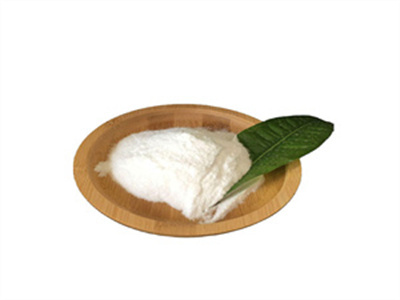
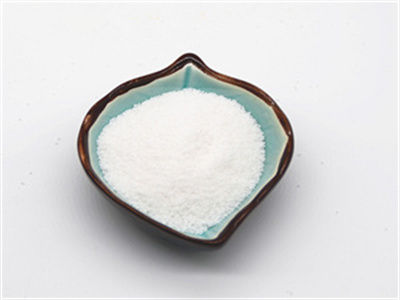
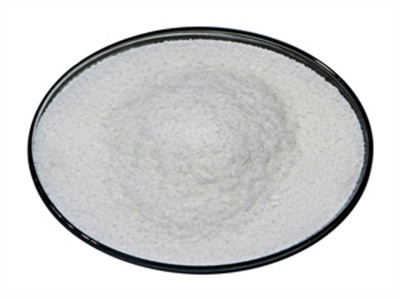
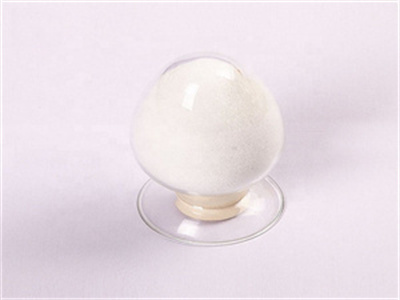
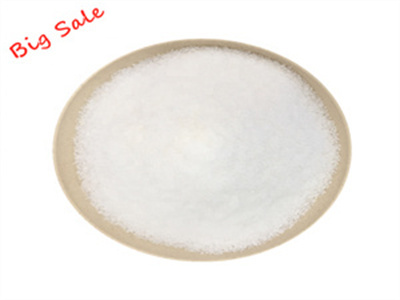
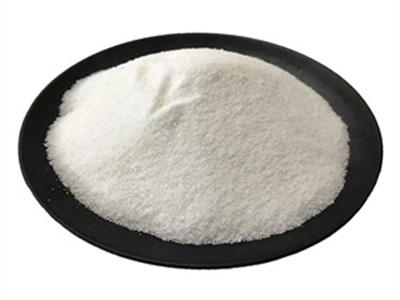
- Appearance: white granule powder
- CAS No.:9003-05-2830
- Type: nonionic
- Formula: (C3h5no)N
- Solid Content: ≥87.9%
- Application:textile,sugar industries
- Transport Package: 25kg/bag
- Delivery: 3-5day
flocculants coagulants wastewater treatment polyacrylamide
used in a wide range of industries and applications, flocculants help to remove suspended solids from wastewater by aggregating contaminants into flakes or “flocs” that float to the surface of the water or settle at the bottom. they can also be used for lime softening, sludge thickening, and solids dehydration.
coagulants and flocculants in polymer water treatment,the next chemical reaction is called flocculation, which helps create even larger flocs or macro-flocs. in this step, a water-soluble polymer, or flocculant, helps bring together the coagulated particles to form longer and larger particle chains. as the flocculant chains become larger, they become heavier and even visible to the naked eye.
flocculants in wastewater treatment polyacrylamide
flocculants are substances that promote the agglomeration of fine particles present in a solution, creating a floc, which then floats to the surface (flotation) or settles to the bottom (sedimentation). this can then be more easily removed from the liquid. flocculants can be organic or inorganic, and come in various charges, charge densities
water treatment flocculation: which flocculation agent is best?,chitosan is a versatile flocculant that is used in a number of different active water treatment and semi-passive water treatment applications, as well as in fully passive water treatment systems. the flocculant is designed to be eco-friendly and to support long-term effectiveness for filtration media and equipment. polyacrylamide.
coagulation and flocculation in water treatment explained
the main purpose of coagulation and flocculation is to treat turbid (hazy or cloudy) water, thus improving water quality. this is especially key for wastewater treatment, and can reduce organic loads and suspended solids by up to 90%. suspended solids are commonly found in the majority of surface water supplies and all wastewater supplies.
application of flocculants in wastewater treatment,in some cases, these metal salts can be used in wastewater treatment without assistance of flocculant(s) (wang et al., 2011, zhong et al., 2003). nowadays, the usage of inorganic coagulants has been reduced due to its inefficiency in wastewater treatment with small dosage and narrow application.
coagulants and flocculants for water treatment manufacturer
veolia offers a comprehensive portfolio of coagulants and flocculants that aid in the clarification process. whether you need coagulants or flocculants, liquid, emulsion or powders, cationic or anionic products, veolia has a cost-effective solution for your raw water and wastewater. our application expertise ranges from operational optimization
recent achievements in polymer bio-based flocculants for sale.polymer flocculants are used to promote solid–liquid separation processes in potable water and wastewater treatment. recently, bio-based flocculants have received a lot of attention due to their superior advantages over conventional synthetic polymers or inorganic agents.
application of flocculants in wastewater treatment
abstract. flocculation is an essential phenomenon in industrial wastewater treatment. inorganic coagulants (salts of multivalent metals) are being commonly used due to its low cost and ease of use. however, their application is constrained with low flocculating efficiency and the presence of residue metal concentration in the treated water.
cationic polyacrylamide copolymers (pam): environmental half,background cationic polyacrylamide copolymers (pam) are used for sludge dewatering in municipal waste water treatment and might enter the environment by spreading of the sludge on agricultural land. concern has been expressed since little is known about the degradation of pam in soils. to obtain detailed information on the polymer’s fate in the soil compartment, the degradation of 14c
flocculation: wastewater treatment explained
in conclusion, flocculation is a critical process in the treatment of wastewater, playing a pivotal role in the removal of contaminants and the improvement of water quality. this process involves the aggregation of fine particles into larger flocs, which can be more easily removed from the water. the effectiveness of the flocculation process
malaysia factory outlet anionic polyacrylamide pam polymer,floerger an 900 series anionic polyacry l a m i d e. anionic polyacrylamide hse/anpam/dm/9807-1 physico-chemical properties anionic polyacrylamide: copolymer of acrylamide and acrylic acid, sodium salt b. molecular structure a. chemical identity chemical name:. . . . . 2-propenoic acid, sodium salt polymer with 2-propenamide other names:. . . . . .
anionic polyacrylamide manufacturer,anionic polyacrylamide
he anionic polyacrylamide (APAM) is a frequently used flocculant in treatment of various industrial wastewaters, including those from electroplating factory, metallurgic plant, steelwork and coal plant.
flocculent suppliers in south africa use to water well drilling sludge,horizon model 250psi ductile iron low pressure flexible couplings. 250psi carbon steel corrosion and low pressure coupling, especially designed for low pressure pipeline system. anti-corrosion coating material, resistan most level chemical substance (for example: fungicides, oxidizing agents, contact supplier
treatment of pulp and paper mill wastewater
organopol 5415 with very high molecular weight and low charge density is the best flocculant with highest flocculation efficiency for the treatment of the pulp and paper mill wastewater. it can achieve 95% of turbidity reduction, 98% of tss removal, 93% of cod reduction and svi of 14 ml g −1 at the optimum dosage of 5 mg l −1 .
flats for sale in mumbai,explore + flats for sale in mumbai on. find 449+ houses/villas for sale, + apartments for sale. 100% verified properties. enquire now!
low price anionic polyacrylamide msds agent zimbabwe
classification: chemical auxiliary agent: appearance: white to off-white crystalline granular: molecular weight: 14-16 million: cas no. 9003-05-8: package: 25kg / bag, kraft Chemicals Polyacrylamide or as requested
very good pam polyacrylamide polyelectrolyte price for sale,bulkbuy very good pam polyacrylamide polyelectrolyte price for industrial wastewater treatment usage price comparison, get china very good pam polyacrylamide polyelectrolyte price for industrial wastewater treatment usage price comparison from polyacrylamide, flocculant manufacturers suppliers on video channel of made in china..
- Could polymeric nanocomposite be an environmentally benign adsorbent for water treatment applications?
- The polymeric nanocomposite could be an environmentally benign and promising adsorbent for water treatment applications. Figure 7. Hydrogel adsorbent with starch-graft-poly (acrylamide)/graphene oxide/hydroxyapatite nanocomposite as constituent. Adapted from Hosseinzadeh and Ramin [ 80 ].
- Can cation-active polyelectrolytes treat a water polluted with organic matter?
- This paper investigates the best attainable treatability to which a water polluted with a technologically significant concentration of organic matter is treatable by different cation-active polyelectrolytes and their blends with mineral coagulants in comparison to that attainable by traditional hydrolysing coagulants.
- Can nanostructured sorbents be used to treat polluted water?
- Nanostructured sorbents have a high capacity for the treatment of polluted water and may be tailored to target specific pollutants [ 10, 11 ]. There have been recent improvements in the development of polymer nanocomposites (PNC), which have enhanced their novel applications in pollution remediation.
- What are polymeric Adsorptive membranes?
- Polymeric adsorptive membranes are generally considered potent pollution remediation technologies and have various applications in wastewater treatment plants and household water polishing.