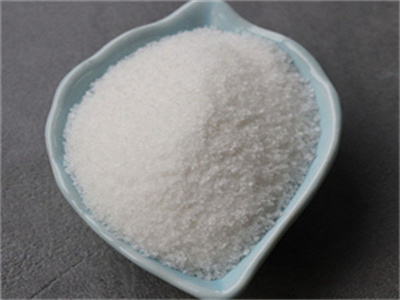
- Classification: chemical auxiliary agent
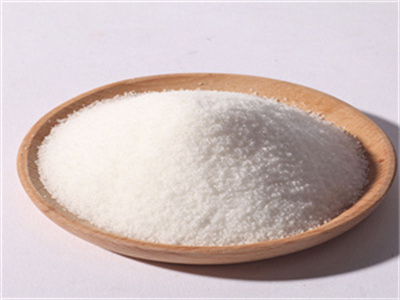
- Appearance: white/light yellow granule or powder
- CAS No.:9003-05-1830
- Type: anionic
- Formula: (C3h5no)N
- Solid Content: 88.5% Min
- Application:electronics chemicals, leather auxiliary agents
- Transport Package: net weight 25kg/bag
- Delivery: 3-5day
high quality polyacrylamide (pdf)
this standard describes polyacrylamide (pam) for use in the treatment of potable water, wastewater, and reclaimed water. major changes made to the standard in this edition include the following: requirement that suppliers provide product technical data sheets along with msdss; requirement that product technical data sheets contain specific information; introduction of a limit for ethoxylated
degradation of polyacrylamide and its significance in nature,high quality flocculant polyacrylamide (pam) is commonly used as a flocculant in water and wastewater treatment, a soil conditioner, and a viscosity improver and friction enhancer.
polyacrylamide high purity pam powder
Polyacrylamide (PAM) for Papermaking Wastewater Treatment can improve the retention rate of fillers and pigments, as well as paper strength when used as a reinforcing agent and other auxiliary materials in papermaking.
technical specification poly acrylamide water treatment,technical specification poly acrylamide product name: poly acrylamide cas no: 9003-05-8 formula: c3h5 no molecular weight: 71.0079 description: polyacrylamide, known as pam, is a white powder or granule. polyacrylamide is a kind of macromolecule polymer. it is not soluble in some organic solvents. provided with a good
polyacrylamide in water treatment enhancing efficiency flocculant
pam in wastewater treatment pam is widely used as a coagulant and flocculant in wastewater treatment. its high molecular structure effectively aggregates suspended particles in water, leading to the formation of larger clusters that are easier to settle and separate, thereby enhancing wastewater clarity and treatment efficiency.
partially hydrolyzed polyacrylamide, grade: technical, purity,mumbai healthcare industries offering partially hydrolyzed polyacrylamide, grade: technical, purity: extra pure at rs 190 in mumbai, maharashtra. also find polyacrylamide price list
polyacrylamide in wastewater treatment: applications
polyacrylamide (pam) is a high molecular weight polymer that comes in three types: cationic, anionic, and non-ionic. its molecular chain contains a large number of covalent bonds, giving it excellent adsorption properties. as a result, pam is widely used in municipal wastewater treatment, oil extraction, pulp and paper production, and other fields.
water treatment polyacrylamide in mumbai exporter of sale.water treatment polyacrylamide has witnessed splendiferous growth since its inception in the year 1980. the methodology and ideology of the ceo in the respective field has assisted the company to acquire distinguished position amidst the leading organic pigment exporters and suppliers in india.
cationic polyacrylamide copolymers (pam): environmental half
background cationic polyacrylamide copolymers (pam) are used for sludge dewatering in municipal waste water treatment and might enter the environment by spreading of the sludge on agricultural land. concern has been expressed since little is known about the degradation of pam in soils. to obtain detailed information on the polymer’s fate in the soil compartment, the degradation of 14c
degradation of polyacrylamide and its significance in nature,high quality flocculant polyacrylamide (pam) is commonly used as a flocculant in water and wastewater treatment, a soil conditioner, and a viscosity improver and friction enhancer.
chemical polyacrylamide (PAM) flocculant types
polyacrylamide (pam) is a water-soluble linear polymer and one of the most widely used water-soluble polymer compounds.its derivatives find applications as efficient coagulants, thickeners, paper enhancers, and liquid friction reducers across various industries, including water treatment, papermaking, petroleum, coal, metallurgy, geology, textiles, and construction.
(pdf) use of synthetic polymers and biopolymers for soil,use of synthetic polymers and biopolymers for soil stabilization in agricultural, construction, and military applications a. r. (1986). polyacrylamide application in irrigation water to
pool clarifier vs. flocculant: what’s the difference?
there’s nothing more frustrating than seeing cloudy or debris-filled water in your swimming pool. cloudy pool water is often the result of improper chemical balance and/or fine debris that happens to fall in. very fine particles may pass right through the filter, which makes them especially difficult to remove.
understanding the different types of flocculants flocculant,flocculation is an essential step in most water treatment processes, whether it is for drinking water production, wastewater treatment, or industrial water treatment. if you’re looking to understand the different types of flocculants and their applications in water treatment, then this comprehensive guide is perfect for you.
polyacrylamide market size, share growth report, 2030
anionic and cationic polyacrylamide polymers were the dominant product segments, accounting for more than 78.0% of the overall demand in 2022. anionic polyacrylamide polymers are used in applications including wastewater treatment, pulp and paper industry, aquaculture, food beverage, coal mining, food beverage, and oil gas industries. the
research on a new cationic polyacrylamide (cpam) with high quality,the cationic monomers on these microblock segments can be polymerized to form a cpamd with a new cationic microblock structure. in addition, microwave has mechanical effects such as oscillation, emulsification, and diffusion, which can accelerate the heat and mass transfer process of the reaction system, thus accelerating the reaction rate (wiesbrock et al. 2004; hoogenboom and schubert 2007
application of polyacrylamide flocculants for water treatment
release of the aa monomer from paa in related industries, soil grouting and other situations is a major cause of water pollution. according to the international agency for research on cancer (iarc
polyacrylamide flocculant import data of vietnam,for more details of vietnam customs data of polyacrylamide flocculant or any other product kindly contact or call +91-11- origin country china (1)
- What is polyacrylamide (PAM)?
- PAM, or anionic Polyacrylamide, is a very long chain, high molecular weight organic polymer produced from natural gas, with characteristics which make it useful as a soil amendment to control runoff and soil loss.
- What is hydrolyzed polyacrylamide (HPAM)?
- Hydrolyzed polyacrylamide (HPAM), a derivative resulting from the hydrolysis of PAM, demonstrates significant thickening capabilities in freshwater and at relatively lower temperatures (75 °C) due to strong intra- and inter-chain electrostatic repulsion of carboxylate groups 14.
- What is a high molecular weight Pam?
- Molecular Weight: PAM has a very high molecular weight, typically ranging from several million to over ten million. Higher molecular weight PAMs are generally more effective in coagulation, but the selection depends on specific applications and water quality.
- Can polyacrylamide improve hydrocarbon production efficiency?
- Provided by the Springer Nature SharedIt content-sharing initiative Polyacrylamide (PAM) and its derivatives play a pivotal role in various facets of hydrocarbon development. Proper application and treatment of PAM have the potential to enhance hydrocarbon production efficiency while mitigating adverse environmental effects.